- Get directions
- Leave a review
- Claim listing
- Bookmark
- Share
- Report
- prev
- next
- Tuesday, May 5, 2026 @ 11:00 am
In recent years, against a backdrop of geopolitical uncertainty and market volatility, Switzerland's biotech sector has delivered continued growth, powered by innovation, talent, and tenacity. Annual growth rates of around 5% have been supported by sustained levels of R&D investments, record funding, and accelerated startup creation by venture builders.

A small home market and a national policy to trust the power of free markets, forces Swiss startups to adopt a business proposition designed to attract global investors from the outset and to develop healthcare solutions that address critical global medical needs. Switzerland's progress in the biotech sector in 2025 was neither easy nor linear. Growth came amid tightening capital markets, rising regulatory complexity, and intense global competition. Progress required characteristic Swiss steadfastness: a long-term commitment to scientific rigor, operational excellence, and the determination to turn discovery into impact.
Companies and institutions continued to invest in international alliances, knowledge exchange platforms, and the development of top-tier talent. Biotech advances rarely happen in isolation but in partnership with others, with support across the entire ecosystem. A collaborative approach allows Swiss biotech to maintain momentum, broaden opportunities, and strengthen its role as a powerhouse of innovation and a trusted global partner.
The power and effectiveness of the Swiss talent pool
Small in population, modest in geographical land area, Switzerland is synonymous with precision and durability, and exerts a disproportionate influence on the global biotech landscape. Its economic resilience is underpinned by strong institutions, political stability, world-class infrastructure, and scientific excellence.
At the core of its success in biotech is an enduring commitment to apprenticeship schemes alongside world-class universities, lifelong learning, and talent retention.
The two main global talent rankings, which benchmark countries on their ability to attract, develop, and retain skilled workers, are the INSEAD Global Talent Competitiveness Index (GTCI)¹ and the IMD World Talent Ranking². They differ significantly in scope, focus, and methodology and are not directly comparable.
Switzerland was placed first out of 135 countries in the INSEAD GTC Index for eleven consecutive years from its inception in 2013 to 2023. In 2024 — the latest ranking currently available — it was in second place (see Figure 1). The ranking measures how effectively countries attract, grow, and retain talent and, more importantly, achieve tangible outcomes in skills, productivity, and innovation. Switzerland is recognized as having exceptionally high resilience, reflecting institutional trust, inclusive governance, and social systems built to absorb shocks and to persevere.
Switzerland also continues to dominate the IMD World Talent Ranking; it has held the top spot for twelve consecutive years from its inauguration in 2014 to 2025 (see Figure 1). Switzerland ranks first in investment and the development of its talent, and performs strongly in key areas such as quality of life, high minimum wages, strong healthcare and institutional frameworks. It benefits from a successful apprenticeship system, motivated workers and experienced managers, although there is room for improvement in gender diversity.

A multinational industry by design
Switzerland is at the heart of Europe and its economic story has always been shaped by movement across borders. From its earliest industrial development, newcomers have built sectors that continue to define the country's commercial identity.
Today Switzerland is one of the world's most globally connected economies: highly specialized, service-driven, and rooted in knowledge and innovation. A 2025 Swiss government study showed that EU workers are crucial to the country's economic strength. A dual migration framework allows EU/EFTA citizens to work freely in Switzerland, and around 6 to 9% of the workforce commutes across borders daily.³’⁴ A 2025 study by Demografik of northwestern Switzerland found that roughly 70% of skilled life sciences workers hold foreign citizenship, and around 30% are cross-border commuters.⁵
Across Basel, Bern, Geneva, Lausanne, Zug, and Zurich, companies recruit the best talent from around the world and bring together dozens of nationalities and cultures under one roof.

Skills needed for the coming decade — Switzerland as a magnet and partner for biotech talent
Switzerland is one of the top ten economies by GDP per capita, and is well-positioned to remain a highly attractive collaboration partner. The biotech industry's profound transformation — driven by technological advances and shifting workforce dynamics — is creating growing demand for professionals who can navigate complexity and change. For Swiss biotech SMEs, adaptability, communication, collaboration, resilience, and technological fluency have become essential.
Few countries can match Switzerland's breadth and depth of talent across the biotech value chain in therapeutic modalities including small molecules and biologics, cell and gene therapies, RNA, and digital health. In oncology, rare diseases, immunology, neurology, and infectious diseases Switzerland has built the expertise and capacity to drive innovation at every stage, from discovery to development and delivery.
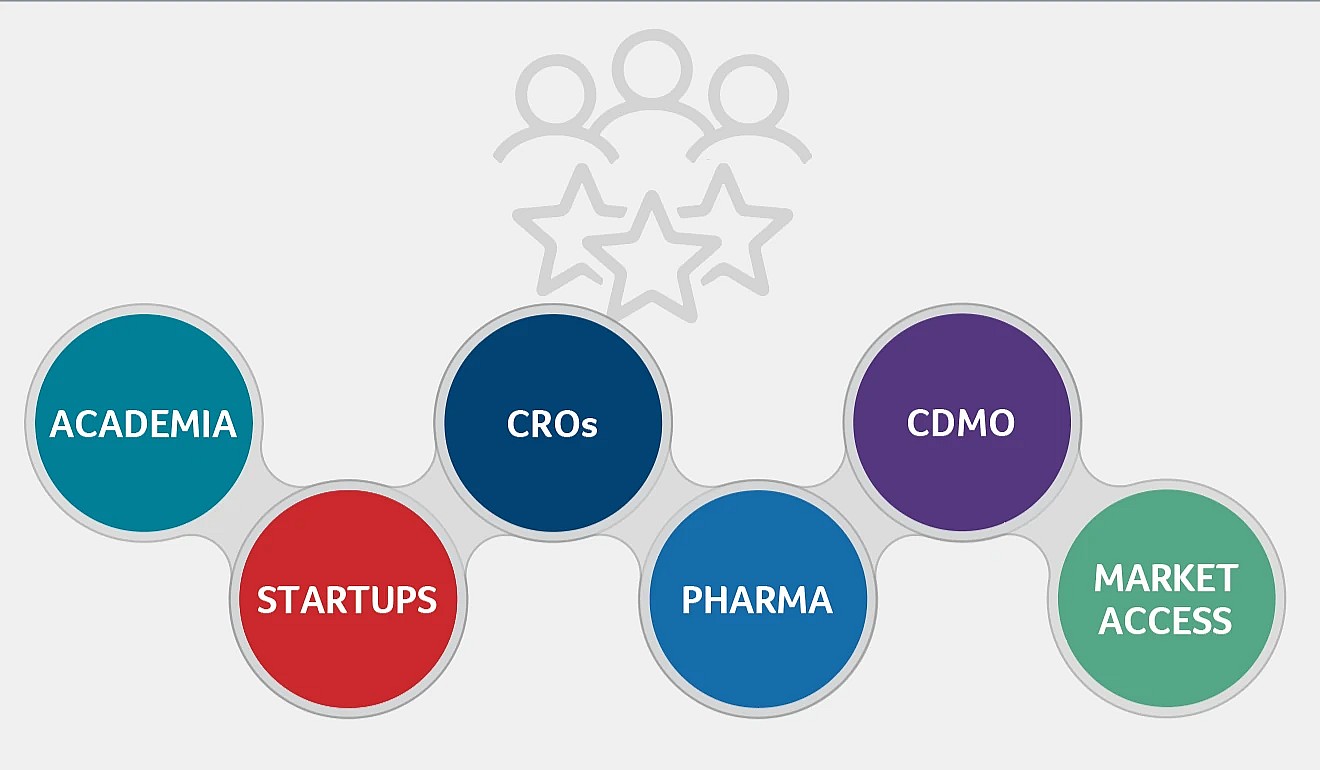
Switzerland offers a rare continuity: from intellectual property creation and academic discovery to clinical development, regulatory strategy, market access, manufacturing, and distribution. This is an ecosystem in which startups and university spin-offs coexist with scale-ups, CDMOs, and global biopharma hubs.
The Swiss talent pool is more than a domestic resource; it is a global one. The country attracts innovators and entrepreneurs from around the world, and their impact is significant: internationally-led enterprises consistently rank among Switzerland's top-performing businesses. In 2025, Switzerland reached a record high in the number of company startups, attracting a growing number of foreign entrepreneurs.
In 2025, the INSEAD index highlighted that adaptability and cooperative skills set Swiss workforces apart.¹ These capabilities are emerging as key drivers of talent development, enabling organizations in Switzerland to upskill their people and remain agile in a rapidly evolving global economy.
The IMD World Talent Ranking also emphasizes a shift in global talent mobility.² Ongoing geopolitical and economic uncertainty, rising living costs and inflation, stronger global competition for talent, and the long-term effects of global crises are changing how people make career and relocation decisions.
In times of uncertainty, countries like Switzerland, which provide economic security, political stability, and strong earning potential, are likely to become even more appealing destinations for highly skilled talent worldwide.
Tenacity: the driving strength behind Swiss biotech success
While luck can influence certain outcomes, true innovation requires purpose, focus, rigor, and perseverance to drive inventions and breakthroughs.
Switzerland's ecosystem provides a significant advantage. Universities and research institutions continue to enable disruptive innovation, while spin-offs frequently secure top funding rounds, and successful exits are now more common, encouraging capital to flow back into the ecosystem. Major biopharma deals demonstrate Switzerland's ability to deliver globally advanced life science solutions.⁶
The Financial Times, in collaboration with Statista and Sifted, named Switzerland a thriving hub for startup innovation in its 2025 ranking, positioning the country as a significant player in Europe's startup landscape.⁷ The 2025 Top 100 Swiss Startups ranking identified 20 biotech companies as the most promising early-stage ventures poised to scale, disrupt, and shape the future.⁸
Switzerland — a reliable and attractive partner
A multilingual nation bridging four distinct cultural regions, and unified in its commitment to excellence, Switzerland is able to attract and retain exceptional talent and funding, driving impact on global biotech. Yet Switzerland cannot succeed in isolation; international collaboration is essential. Many Swiss biotech projects are multinational from the outset, built on academic-industrial partnerships and supported by global R&D networks.
It is the combination of diverse, international top-tier talent and Swiss tenacity that has proven capable of turning innovation into impact. A culture of persistence, entrepreneurial spirit, and ownership can transform the most daunting challenges into unprecedented opportunities and breakthrough discoveries. The high level of patent filing, the sustained growth and investment in R&D projects and infrastructure are strong forward-looking indicators that show that Switzerland is on a solid track to remain a powerful center of innovation and collaboration.
References
- INSEAD Global Talent Competitiveness Index 2025
- IMD World Talent Ranking
- OECD International Migration Outlook 2025 – Switzerland
- IamExpat: EU expats vital to maintaining Swiss economy
- Demografik: LS-Fachkräfte study
- Swiss Venture Capital Report
- Financial Times 2025 ranking — Switzerland's startup ecosystem
- Top 100 Swiss Startups 2025