
- Get directions
- Leave a review
- Claim listing
- Bookmark
- Share
- Report
- prev
- next
- Tuesday, May 5, 2026 @ 11:00 am
Switzerland is the chosen location of a large number of world-class biomanufacturing facilities. In addition to its strong focus on therapeutics and drug products, Switzerland's biomanufacturing sector extends beyond the pharmaceutical industry. Strong talent, innovation, collaboration, and long-term strategy are some of the factors that underpin Switzerland's global impact.
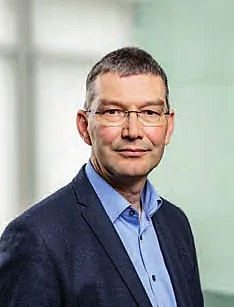
Jan Lucht
scienceindustries | Head Biotechnology
Biomanufacturing has strong roots in Switzerland, a significant current presence and promising prospects.¹ The foundation for the Swiss pharmaceutical industry was laid in the second half of the 19th century, when the demand for synthetic textile dyes stimulated the development of an organic chemistry industry around Basel in north-west Switzerland. F. Hoffmann-La Roche & Co was established as a purely pharmaceutical company in 1896; André Hoffmann, great-grandson of Fritz Hoffmann-La Roche, the company founder, is this year's guest editor. Early in the 20th century, chemical companies Ciba, Geigy, and Sandoz shifted their focus to pharmacological products.
Development of Swiss biomanufacturing
Swiss chemical and pharmaceutical companies embraced new production technologies as they became available. In 1934, Roche became the first Swiss company to use a microbiological fermentation process to synthesize vitamin C, marking the beginning of biomanufacturing in Switzerland. Swiss companies were active in fermentation R&D and process development, but production facilities were mostly located outside of Switzerland.
In the 1970s, genetic engineering tools became available, enabling US companies to develop the market for recombinant proteins. In Switzerland, Biogen, one of the world's first biotech companies, was founded in Geneva in 1978. The company initially focused strongly on R&D.
However, the commercial development of biomanufacturing using genetically modified organisms was hindered in the EU and Switzerland by the absence of a clear regulatory framework. The construction of Switzerland's first major recombinant protein production facility, the Ciba-Geigy 'Biotechnikum', was relocated just across the border to Huningue, France, in 1991 due to societal and political resistance in Basel.
Just a few years later, the framework conditions had improved so much that companies were making major investments in biomanufacturing facilities in Switzerland. Examples include Serono in Vevey in 1999 (now Merck), Roche in Basel in 2014, UCB in Bulle in 2014, CSL Behring in Lengnau in 2015 (now operated by Thermo Fisher Scientific), and Biogen in Luterbach in 2016. Many more companies followed suit in selecting Switzerland as the location for biomanufacturing plants.
Swiss biomanufacturing today
Switzerland is now firmly established as a major global biomanufacturing hub, hosting several world-class sites spread throughout the country. Some of these are clustered around the regions of Zurich, Basel, and in Western Switzerland (Bern, Lausanne, Geneva and Valais; see Figure 1). Most of these sites focus on pharmaceutical products such as therapeutic monoclonal antibodies and biologicals, as well as vaccines and innovative cell and gene therapies. In addition to globally leading Swiss companies such as Roche, Novartis, and Lonza, international companies with headquarters abroad have been attracted to Switzerland to establish biotech production facilities and make the country part of their global production network. Conversely, Swiss companies also invest in biomanufacturing plants abroad to ensure production close to global markets.
A look at the Swiss export statistics provides an insight into the importance of biomanufacturing in Switzerland for the global healthcare supply and the local economy. In 2025, biomanufactured immunological products, including monoclonal antibodies and vaccines, contributed 20% (CHF 57.4 billion) to the total Swiss exports of CHF 287 billion (see export article).

Switzerland is not only an important global biomanufacturing hub. Swiss companies also drive biomanufacturing developments globally and contribute to the continuous expansion of biotechnology applications for industrial production.
Extension beyond pharma
Biomanufacturing provides a means of producing valuable compounds for various applications. For certain product categories, such as biologicals and monoclonal antibodies, biotechnological production is the only viable option. In other cases, such as for fine chemicals, biomanufacturing offers economic and ecological advantages. It can contribute to replacing fossil inputs with renewable resources, thereby helping to protect the climate, and it can provide more reliable alternatives to limited natural raw materials.
Biomanufacturing is therefore increasingly being used in Switzerland for products outside the pharmaceutical sector. In 2000, Roche launched a large-scale biotechnological production plant for riboflavin (vitamin B2) for use in health products, food, and animal feed; it is located in Grenzach, Germany, close to the Swiss border and just across the Rhine River. The plant is now owned by dsm-firmenich.
In a groundbreaking innovation for the flavor and fragrance industry, the Swiss company Firmenich (now part of dsm-firmenich) introduced Clearwood® in 2014. This is the first fragrance compound developed and produced by industrial "white" biotechnology, and combines the creamy warmth of amber with a dark, woody character reminiscent of patchouli. Givaudan, alongside dsm-firmenich, is one of the world's leading flavor and fragrance producers and is increasingly using biotechnology to produce compounds.
There are Swiss companies involved in developing biomanufacturing processes outside the pharmaceutical sector, where final production facilities are located abroad. Examples include Arxada's versatile CDMO biomanufacturing site for specialty chemicals in Kouřim, Czech Republic, and dsm-firmenich's involvement in joint ventures for the Avansya fermentation plant for low-calorie sweeteners in Blair, Nebraska, and the Veramaris production facility for valuable microalgal omega-3 fatty acids in the same location.
Talent and tenacity secure Switzerland's place in global biomanufacturing
Switzerland occupies a unique position in the global biomanufacturing landscape due to a combination of factors. These include political stability, highly skilled employees, and excellent academic and industrial research facilities. Swiss virtues such as long-term strategic foresight and the ability to manage challenges also contribute to this success.
One example of this is Lonza. In the 1980s, the company developed tools for microbial fermentation. In the 1990s, it expanded into mammalian cell culture. In the 2010s, Lonza developed its IBEX® strategy for highly flexible CDMO production facilities. These preparations, together with the successful management of a rapidly expanding workforce, enabled the significant increase in production capacity for the COVID-19 mRNA vaccines in 2021 at its Visp site. A strong focus on customers' needs, together with technological flexibility, supports the further expansion of Lonza's activities.
Of course, producing innovative healthcare solutions from biomanufactured APIs requires specialized high-tech knowledge and equipment. An example for this is ten23 health, which has significantly increased its sterile manufacturing capacity at its facility in Visp to meet rising demand for complex drug products. It is also collaborating with BD and other partners to pilot innovative Radio Frequency ID-enabled traceability for prefillable syringes. This technology assigns a unique Container Unique Identifier to each syringe via an RFID tag, enabling individual unit tracking, enhanced process efficiency, automated reconciliation, and improved supply chain visibility from filling to final assembly.
National and international collaborations between companies and academia are also important drivers of Swiss innovation in biomanufacturing. For instance, the Swiss Industrial Biocatalysis Consortium (SIBC) is a collaboration of several industry partners and Swiss academic scientists that has allowed for the development of innovative, cross-sector biocatalytic approaches.²
Technological innovations and investments in future talent (see also SATW article)will be crucial in maintaining Switzerland's position as a biomanufacturing hub amid increasing global competition. Most importantly, framework conditions must be continuously reviewed and strengthened to ensure that Switzerland remains a leading biomanufacturing hub amid global change.

References
- Biomanufacturing Locations in Switzerland. Altorfer et al. Chimia, Vol. 79 No. 5 (2025). https://doi.org/10.2533/chimia.2025.292
- The Swiss Industrial Biocatalysis Consortium (SIBC) turns 20! Bisagni et al. Chimia, Vol. 79 No. 5 (2025). https://doi.org/10.2533/chimia.2025.299